
A cluster that shouldn't exist
Walk into the Afghan food cluster off Lajpat Nagar on any given night and you'll see something that makes no economic sense. Five to seven restaurants are stacked wall-to-wall, serving near-identical menus at near-identical prices. Two of them — Mazaar and Afghan Darbar — pull in an estimated 80–90% of all foot traffic. The rest sit empty.
This is not a story about better kebabs. The menus overlap. The price points overlap. A hungry customer standing on the street has no way to taste-test the difference between four neighboring kitchens. So how do they choose? They look at the crowd. And then they look at their phone.
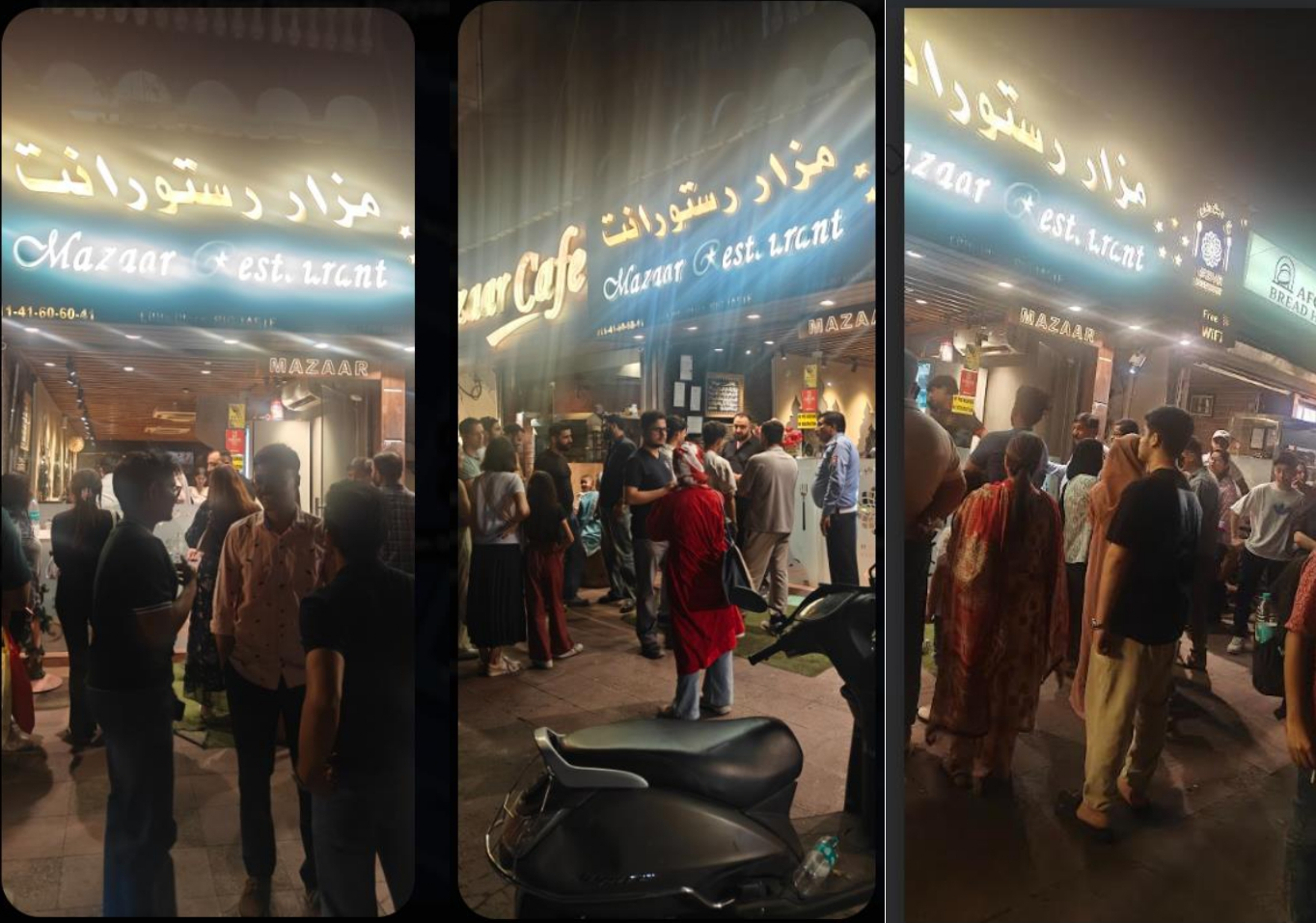
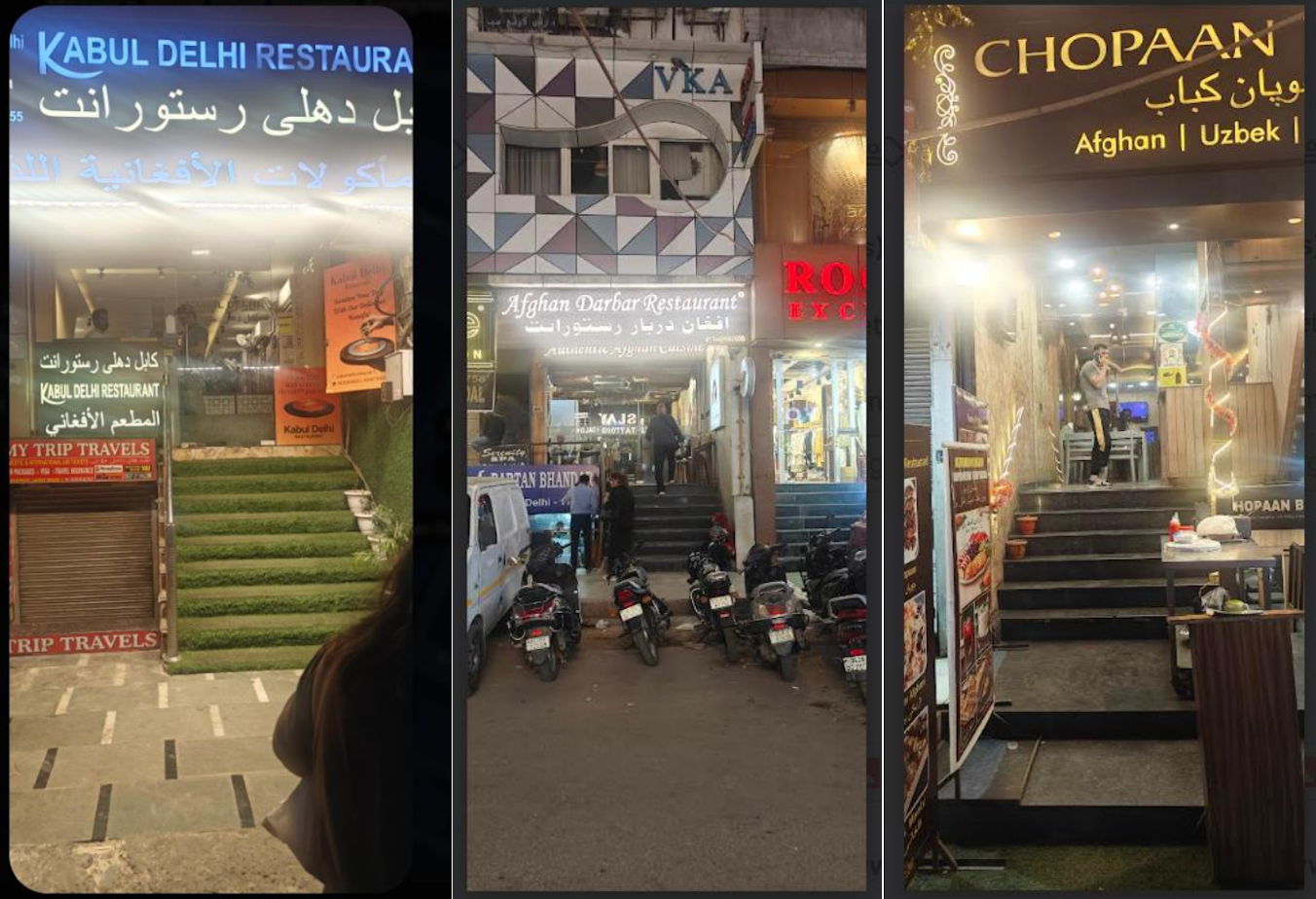
"Despite offering nearly identical menus, price points and locations, the neighboring restaurants remain largely vacant while the market leaders maintain 30–60 minute wait times."
What the Google Reviews reveal
The physical occupancy of each restaurant tracks almost perfectly with its Google review volume and velocity. This isn't a coincidence — it's the entire mechanism. The restaurants with the most reviews rank highest on Google Maps, which puts them in front of more hungry customers, which generates more visits and more reviews. The wheel keeps spinning.
| Restaurant | Google Reviews | Rating | Real-world Occupancy |
|---|---|---|---|
| Mazaar Restaurant | 8,600+ | 4.3 ★ | 100% · Waitlist only |
| Afghan Darbar | 4,500 | 4.2 ★ | ~90% · Near capacity |
| Kabul Delhi (Original) | 1,073 | 4.1 ★ | ~3 customers |
| Chopaan Kebab | 187 | 2.2 ★ | 0–1 customers |
| Kabul Delhi by Mark | 46 | 3.9 ★ | ~1 customer |
Three forces doing the selling
The gap between a packed room and an empty one isn't explained by marketing spend or cuisine quality. It's explained by three psychological shortcuts every pedestrian uses — usually without noticing.
The Herd Effect
Humans use popularity as a proxy for quality. A full dining room is a silent endorsement from dozens of strangers who already made the decision the new customer is about to make. "If they're all here, it must be good."
The Risk of the Unknown
An empty restaurant creates friction. Customers start inventing reasons to walk away — maybe the food is stale, maybe the service is slow, maybe there's a reason nobody's here. No evidence needed. The emptiness is the evidence.
The Feedback Loop
High traffic generates more reviews, which lifts Google Maps ranking, which drives more traffic, which generates more reviews. The leader's advantage compounds every night the competitors stay quiet.
Why neighbors stop existing
Here's the cruelest part: the restaurants next door aren't losing on taste or price. They're losing on visibility. To a pedestrian scrolling Google Maps, a restaurant with 46 reviews doesn't show up in the results at all. It's not being rejected — it's not even being considered.
Even when a hungry customer is standing fifteen feet from the front door, the lack of digital proof prevents the restaurant from entering the decision set. You can't be chosen if you aren't on the shortlist.
Reputation is the engine, not the add-on
This cluster is the clearest real-world proof we've found that for a local restaurant, reputation management isn't a marketing add-on — it's the business itself. Every night a neighboring restaurant stays quiet is a night the review gap widens and the climb back gets steeper.
The goal for any quiet restaurant is simple, even if the work isn't:
Move from the "invisible" bracket into the "crowded" bracket by aggressively closing the review gap. That means a tactical system for generating real, recent reviews on a continuous basis — enough volume to compete, enough velocity to signal "alive" to the Google Maps algorithm, and enough recency to reassure the pedestrian holding the phone.
Without that engine running, the best kebab on the street is just another empty room.